Many Temecula wineries welcome dogs on their outdoor patios and grounds, leashed and well-behaved. Plan around the heat, confirm each winery’s policy before you go, and build the day around your dog’s comfort rather than your tasting ambitions. Use this guide to dog-friendly wineries Temecula dog owners recommend when planning the day.
Temecula is genuinely one of the more dog-tolerant wine regions in California, but dog-friendly does not mean dogs-everywhere. The distinction that matters is patio versus tasting room, and it is set by health codes, not by how cute your dog is.
This guide covers which parts of a winery your dog can actually enter, the etiquette that keeps dog-friendly policies in place, how to handle the valley’s heat, and how to structure a tour day so the dog has as good a time as you do.
The Rule That Governs Everything: Patios Yes, Tasting Rooms No
California health code prohibits animals in areas where food is prepared or served indoors, and winery tasting rooms fall under food-service rules. That is why the universal pattern in Temecula is this: dogs welcome on patios, lawns, and outdoor grounds; dogs not permitted inside tasting rooms, restaurants, or production areas.
Service dogs are the exception, and the law is specific. Under the ADA, a service animal is a dog individually trained to perform tasks for a person with a disability. Emotional support animals do not have public-access rights under the ADA. Winery staff may ask the two legally permitted questions: is this a service animal required because of a disability, and what task has it been trained to perform. They may not ask for documentation or demonstrations.
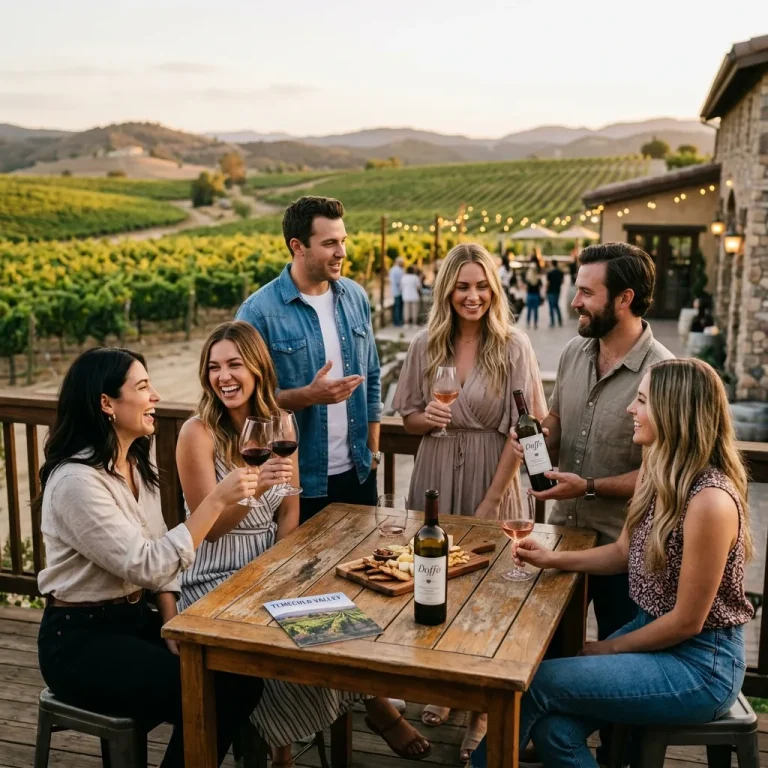
For everyone else, the patio is the venue. The good news is that Temecula’s winery patios are the point. The valley’s best views, the golden-hour light, the long outdoor tables, that is where the experience lives. A well-planned dog day barely feels like a compromise.
Dog Friendly Wineries Temecula Etiquette: The Table of Non-Negotiables
Etiquette is what keeps wineries dog-friendly. One bad incident can end a policy for everyone. Treat these as the price of admission.
| Rule | What it means in practice | Why it matters |
|---|---|---|
| Leash at all times | Standard 6-foot leash, held by a person, not tied to furniture | Off-leash dogs approach other dogs, staff, and food |
| Stay with your dog | No leaving the dog at the table while you go inside to taste | Unattended dogs bark, wander, and knock things over |
| Patio and grounds only | Never bring the dog into the tasting room, shop, or restrooms | Health code; staff can be fined |
| Control barking | A quiet dog is a welcome dog; a barking dog gets asked to leave | Tasting rooms are quiet, conversational spaces |
| Clean up immediately | Bring your own bags; use the winery’s bins | Non-negotiable everywhere |
| No table begging | Keep the dog settled under or beside the table | Other guests are eating; staff are carrying trays |
| Bring water and a bowl | Do not rely on the winery to provide them | Heat management is your job |
The single most common failure mode is the dog that is fine at home but reactive in a busy patio. Wineries during weekend afternoons are high-stimulus environments: other dogs, children, dropped food, live music. If your dog has not practiced settling in busy outdoor settings, do a few trial runs at dog-friendly restaurants before committing to a full wine day.
Heat Rules for Dog Friendly Wineries Temecula Days
Temecula heat is the binding constraint on every dog plan. Summer and early-fall afternoons regularly exceed 90 degrees, and winery patios, even shaded ones, sit on stone and concrete that radiate warmth. Dogs cool through panting and their paw pads, which makes them far more heat-sensitive than their humans.
Plan the day around the thermometer, not the tasting schedule. Morning departures matter more with a dog than without one. An 11:00 am start gets you through the first winery in the coolest part of the tasting day. By the 2:00 to 4:00 pm window, the heat peaks, and that is when you want to be at the shadiest stop, or better, done with outdoor time.
Practical heat rules:
- Paw check: if the patio stone is too hot for the back of your hand, it is too hot for paws. Move to grass or shaded areas.
- Water constantly: a collapsible bowl and frequent refills. Dehydration in dogs escalates fast.
- Never leave the dog in the car: not for five minutes, not with the windows cracked. Temecula parking lots in August are ovens. This is the rule with zero exceptions.
- Watch for heat stress: excessive panting, drooling, glazed eyes, or reluctance to move. Move to shade and cool water immediately.
- Consider booties: if your dog tolerates them, paw booties solve the hot-surface problem on walks between buildings.
If the forecast shows triple digits, reconsider the plan. Some days are simply not dog days. A good operator will tell you straight if the conditions are wrong for bringing a pet.
Which Dog Friendly Wineries Temecula Visitors Should Target
Dog policies change. Wineries update their rules seasonally, and a policy you read about last year may have shifted. The only reliable approach is to verify each stop before the day.
When you book a guided tour, raise the dog question at booking, not on the morning of the tour. The operator works with a set of affiliate wineries and knows which ones currently welcome dogs on their patios. This is one of the quiet advantages of the DIY private format: you pick your wineries from the affiliate list, which means you can build the entire route around confirmed dog-friendly stops. For a standard shared tour, the winery lineup is set, so confirm that the day’s stops work for your dog before you commit.
What to ask, for each winery:
- Are dogs allowed on the patio and grounds today?
- Is there a size or breed restriction?
- Are there designated dog areas, or is the whole patio open?
- Is water provided, or should we bring our own?
- Are there other dogs on site regularly, and is the patio typically crowded?
The answers shape the day. A winery with a dedicated dog area and a water station is a different experience from one that tolerates dogs but clearly prefers you keep them at the edge of the patio.
Structuring the Day Around Your Dog
A day built around dog friendly wineries Temecula regulars love follows a different itinerary from a standard tasting day. The tastings are the same, but the pacing, the stop selection, and the logistics all bend toward the dog.
Start with the morning departure. The 11:00 am to 4:00 pm window is the best frame: cooler hours, first pick of patio shade, and home before the late-afternoon heat peaks. The 1:00 pm start is the worst option with a dog. It puts your outdoor time squarely in the hottest hours.
Build in a long lunch. The pre-ordered lunch option, available at the standard lunch-stop wineries, does double duty on a dog day. It guarantees you a shaded table without a wait, and it gives the dog a solid hour of settled rest under the table while you eat. A dog that has rested through lunch is a different animal in the afternoon than one that has been dragged through three patios without a break.
Limit the ambition. Three wineries is the standard format, and with a dog, three is plenty. The weekday fourth-winery add-on exists, but adding an hour and a stop in peak heat is a dog-comfort decision, not a value decision. Skip it on warm days.
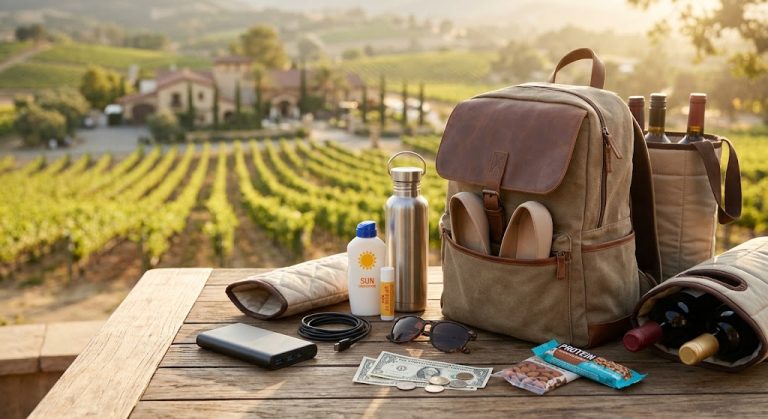
Bring the kit. Collapsible water bowl, a familiar mat or blanket for the dog to settle on, waste bags, a chew or quiet toy for downtime, and a towel. Wineries are dusty. Your car will thank you.
Assign a handler. In a group, designate one person per outing segment as the dog’s person. The failure mode is diffusion of responsibility: everyone assumes someone else is watching the dog, and the dog is suddenly greeting another table’s charcuterie board. Rotate the role so everyone gets tasting time.
Getting to Dog Friendly Wineries Temecula: Why Transportation Matters
Dogs add a transportation wrinkle. Your dog cannot ride in a standard rideshare without prior arrangement, and winery parking lots in summer are not places to leave an animal. For dog friendly wineries Temecula tours, a guided tour with Temecula wine tasting transportation solves the core problem: the dog rides with the group, stays with the group, and nobody is worrying about a car baking in a lot.
Confirm the dog policy with the operator when you book. Vehicles, like wineries, have their own rules, and you want the answer before the morning of the tour. Ask about space: a large dog on a shared tour bus needs a plan for where it sits. On a private tour, this is simpler, because the vehicle is yours and the group agrees on the arrangement in advance.
For couples, the Temecula wine tours for couples format works well with a dog. Smaller groups, more flexibility, and the guide can pace the day around the animal. Mention the dog at booking so the guide plans patio seating and shaded stops accordingly.
Case Scenario: A Golden Retriever Named Biscuit
Jess and Tom wanted a wine day for their anniversary, and Biscuit, their four-year-old golden retriever, was coming. They called two weeks ahead, mentioned the dog at booking, and chose the DIY private format so they could pick dog-friendly stops from the affiliate list.
The kit included a collapsible bowl, a familiar blanket, waste bags, a frozen water bottle that would melt through the afternoon, and a chew toy.
Lunch was pre-ordered. While they ate, Biscuit rested. At the second winery, the temperature hit 91, so they skipped the vineyard walk, stayed on the shaded patio, and cut the stop slightly short. Nobody minded. The third winery had a grassy lawn area where Biscuit could stretch his legs on leash between pours.
They were home by 5:00 pm. Biscuit slept the entire ride. The day worked because every decision, the morning start, the pre-ordered lunch, the shade-first seating, the handler rotation, was made for the dog first and the tasting second.
Frequently Asked Questions
Can my dog go inside the tasting room if it is well-behaved?
No. California health code keeps animals out of indoor food-service areas, and tasting rooms qualify. Patios, lawns, and outdoor grounds are the dog’s territory. Service dogs trained to perform disability-related tasks are the legal exception.
What if another guest’s dog bothers mine?
Tell your guide or the winery host immediately. Staff deal with this regularly and will separate the parties or relocate one group. Do not try to manage another person’s dog yourself. If your dog is the reactive one, be honest about it at booking.
Are there wineries that do not allow dogs at all?
Yes, and policies change. Some wineries restrict dogs during busy events or harvest season, and a few do not allow them period. Verify each stop’s current policy when you book, not the week before last year’s visit.
Should we tip the driver differently when we bring a dog?
The standard gratuity guidance applies. A dog does not change the tip math, but if the driver went out of their way, extra water stops, helping with the dog’s seating, or adjusting the route for shade, recognizing that effort with a little extra is good form.
Planning Your Dog Friendly Wineries Temecula Day
Dog friendly wineries Temecula visitors return to each year prove the region is genuinely welcoming to dogs, as long as you plan like a dog owner and not just a wine lover. Verify policies at booking, pick the morning departure, pack the kit, assign a handler, and let the dog’s comfort set the pace. The tastings will take care of themselves.
When you are ready, contact the team and mention your dog at booking so the day is built around confirmed dog-friendly stops. Browse the guided Temecula winery tasting tours for schedules, or look at the DIY private wine tour if you want to hand-pick your route. The frequently asked questions cover pick-ups and group logistics, and the bachelorette wine tour page shows how private group formats work if your whole crew is coming. This is general planning information; confirm current winery policies and tour details directly before booking.